Camp Hill packs a lot of plumbing history into one small West Shore borough. Its oldest streets, in Camp Hill South, were built out by 1939; Highland Park filled in through the 1940s and 1950s; Country Club Hills and Beverly Park followed into the 1960s. Craftsman bungalows, Cape Cods, Colonials, and mid-century ranches — nearly all of it is now 55 to 95 years old, and most of it still runs on pipes from its building wave.
Central PA Plumbing connects Camp Hill homeowners with independent local plumbers across the borough. Tell us the age of your home and where in the borough it sits — on the hillsides above the river or down toward Conodoguinet Creek — and your provider will know which generation of plumbing to expect before the visit starts.
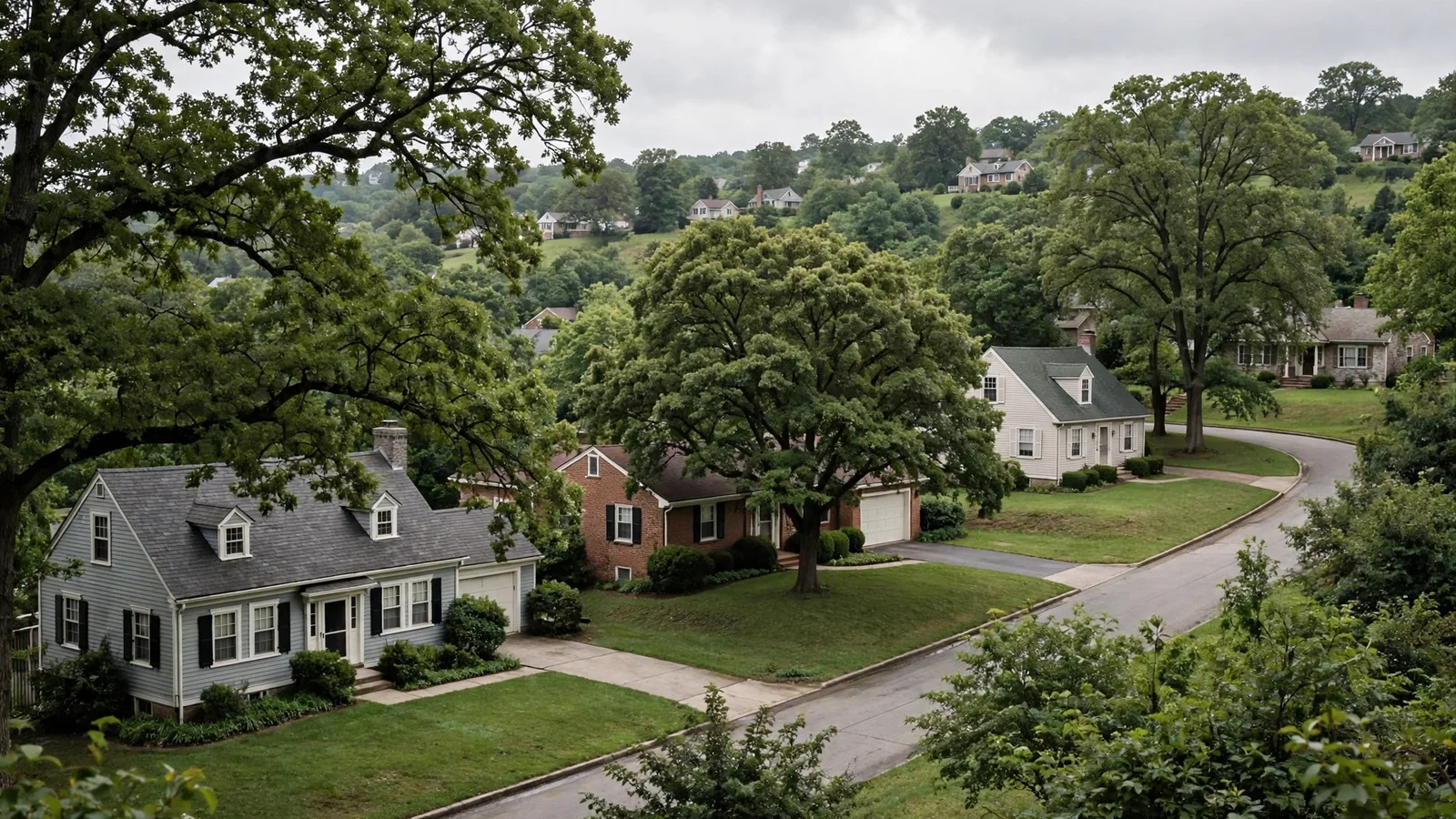
Camp Hill's post-war streets climb the West Shore hills — Cape Cods and ranches whose original pipes are now 55 to 85 years old.
Camp Hill was built in three waves — each with its own pipes
Camp Hill South
The borough's first streets: Craftsman and Colonial homes whose cast-iron drains and galvanized supply lines are the oldest in Camp Hill — many now narrowed, scaled, or patched in sections.
Highland Park
Postwar growth brought Cape Cods and early ranches plumbed in copper and galvanized, with clay sewer laterals that are now 65 to 85 years old and entering their failure years.
Country Club Hills & Beverly Park
The last big wave: mid-century ranches and split-levels, some set into hillsides, whose original water heaters, valves, and lateral joints have been wearing on the same schedule ever since.
Root-choked laterals and aging supply lines lead Camp Hill calls
Clay soil, shale rock, and a canopy of mature trees
Camp Hill's ground works against its pipes in two ways. The borough sits on clay-heavy soil over shale: clay swells when wet and shrinks when dry, so the joints in buried lines are stressed a little more every season, and the same clay drains slowly, leaving ground saturated after storms. Above ground, the mature hardwood canopy that defines the borough's streets sends roots toward any lateral joint that leaks moisture — which is why root intrusion, not grease or wipes, is the recurring Camp Hill sewer story. Where a home sits matters too: hillside properties run long laterals with drainage that falls away from the house, while the low ground toward Conodoguinet Creek deals with sump and backflow questions instead. A provider who works the West Shore reads those three facts — soil, trees, elevation — off your address.
West Shore water, and what the service-line count says
Camp Hill drinks from the same river it overlooks, treated on its own side of the Susquehanna.
Need a plumber in Camp Hill?
From Camp Hill South's pre-war streets to the ranch homes of Beverly Park — one call connects you with an independent local plumber on the West Shore.