Carlisle was settled in 1751 and has been Cumberland County's seat ever since — a town of courthouse square, college greens, and streets where the housing stock starts in the 1700s. Dickinson College, Penn State Dickinson Law, and Carlisle Barracks, one of the Army's oldest posts, anchor a borough whose downtown is built of stone and brick from the 18th and 19th centuries, with each later era layered around it.
Central PA Plumbing connects Carlisle homeowners with independent local plumbers across the borough and its surrounding townships. In Carlisle, tell your provider the age of the house and which side of town it is on — the history of the building is usually part of the diagnosis, and the water story here has a twist most towns do not: the creek Carlisle drinks from is not the creek that floods it.
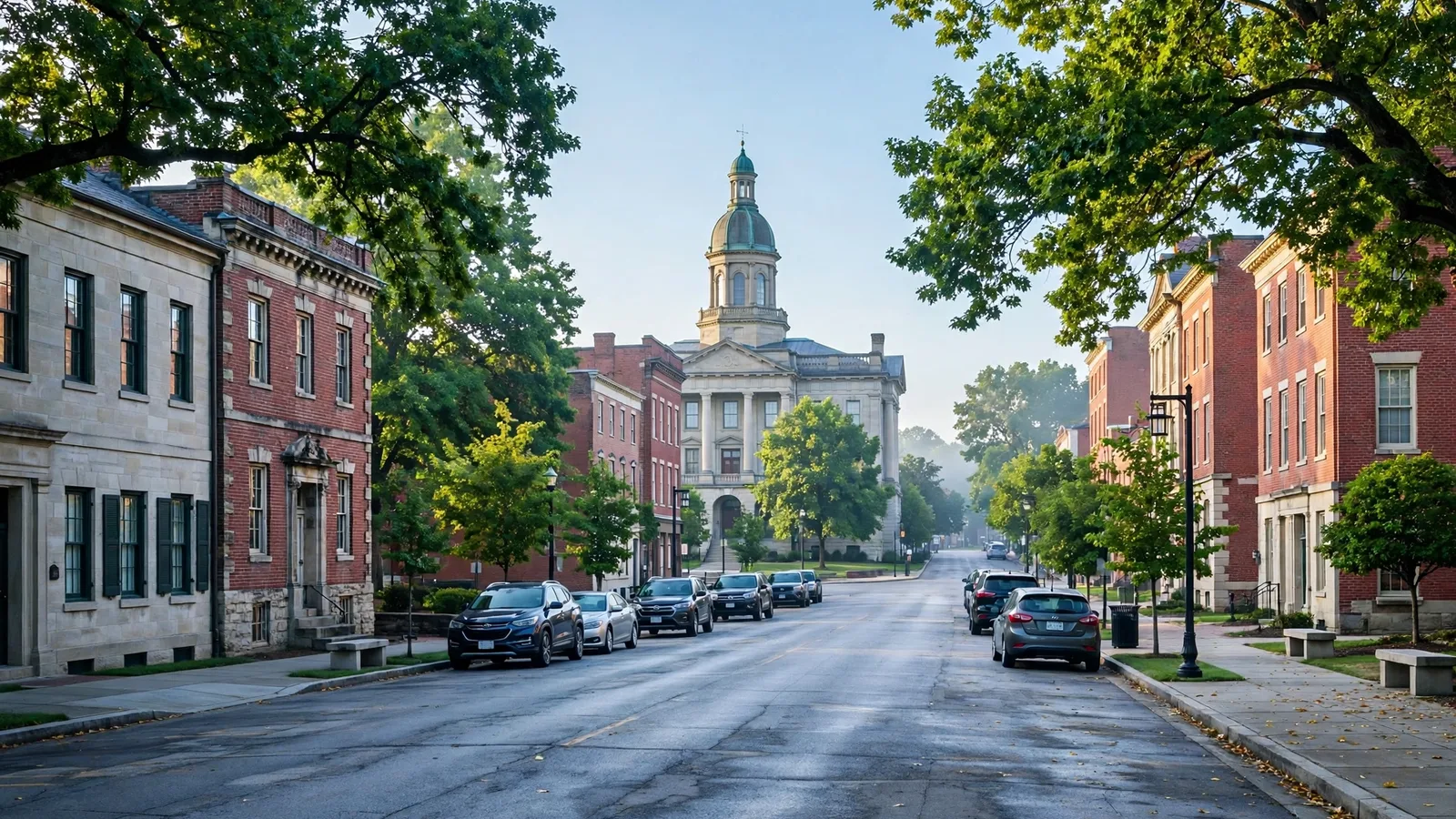
Carlisle's courthouse square anchors a downtown of 18th- and 19th-century stone and brick — the oldest housing stock in this part of the Cumberland Valley.
A 1751 town where two creeks run the plumbing story
Start with the two creeks. The borough's own filtration plant draws drinking water from Conodoguinet Creek, which drains a limestone watershed — so Carlisle water arrives with a mineral load that scales heater tanks, clogs aerators, and wears faucet cartridges at a steady pace. The housing it serves is the oldest in this part of the valley: stone and brick rows near Hanover and High Streets, an 1827 limestone farmhouse here, an 1880 end-row on a stone foundation there, much of it plumbed and replumbed in layers over two centuries. Cast-iron sewer lines and galvanized sections are the default suspects in the historic core, while the townships outside the borough — Middlesex, Dickinson, and the villages toward Boiling Springs — add well water, springs, and on-site septic. One market, three plumbing worlds: borough water and old iron, township wells, and the creek in between.
Carlisle's floodplain runs through its downtown
The second creek is the famous one. LeTort Spring Run is a 9.4-mile limestone spring creek, prized for its wild brown trout, and it runs straight through downtown — channelized in stone walls through Letort Park. The borough's floodplain exists almost entirely along it. Studies of the LeTort describe the mechanism plainly: in heavy rain the creek rises, the storm sewers that drain into it become submerged, and the surcharged system overflows its inlets — flooding streets, homes, and businesses from the drains outward. Carlisle learned how closely its sewers and its trout stream are tied in 2019, when rehabilitation work on the LeTort Interceptor discharged resin-laced water upstream of a documented trout kill and drew a state violation notice. For homeowners near the creek, basement water in Carlisle is often a storm-sewer story, not a burst-pipe story.
- Floor drains and lower fixtures backing up when the LeTort runs high
- Sump systems working hardest in the blocks around Letort Park
- Basements that flood from the drains outward during storm surcharges
- Aging interceptor and lateral lines running alongside the creek corridor
How Carlisle's housing — and its plumbing — accumulated
The stone-and-brick core
County-seat founding era: limestone and brick homes around Courthouse Square whose foundations predate indoor plumbing entirely — every line in them was added later, in layers.
Victorian and college-town growth
Brick rows and larger homes spread around Dickinson College and toward the Barracks, plumbed in the cast-iron and galvanized era that still defines their drains and stacks.
Borough infill, township spread
Mid-century borough blocks, then growth in Middlesex, Dickinson, and South Middleton Townships — where wells, springs, and septic systems replace borough water and sewer.
What Carlisle homeowners call about most
Need a plumber in Carlisle?
From the historic district's stone rows to the Barracks side of town — one call connects you with an independent local plumber who knows the borough.